Noticias
Pregnancy Obesity Breakthrough: Could PQQ and Coenzyme Q10 Become the "Golden Duo" for Maternal and Infant Health?
2025-12-10 14:20:19
Visitas:0
“
In modern society, obesity during pregnancy has emerged as a serious threat to maternal and fetal health. It not only increases the risk of complications such as miscarriage, preeclampsia, and gestati
”
In modern society, obesity during pregnancy has emerged as a serious threat to maternal and fetal health. It not only increases the risk of complications such as miscarriage, preeclampsia, and gestational diabetes, but may also have long-term effects by “programming” the offspring, significantly elevating their future risk of metabolic disorders like obesity and diabetes.
Given the limited effectiveness of traditional nutrition and lifestyle interventions, scientific research is exploring more targeted strategies. Recent attention has focused on two potent antioxidant nutrients: coenzyme Q10 and
Coenzyme Q10 acts as a core cofactor in mitochondrial energy production, directly involved in generating ATP, while also serving as a powerful antioxidant that shields mitochondria from oxidative damage. Studies indicate that supplementation can improve reproductive cell quality, enhance oocyte maturation and embryo grading, and is positively correlated with higher pregnancy rates. In men, it aids sperm motility. Clinically, coenzyme Q10 (200 mg/day) has been shown to nearly halve the incidence of preeclampsia in high-risk pregnant women, with no significant side effects observed, and its plasma levels
In contrast, PQQ stands out for its ability to promote mitochondrial biogenesis—essentially building more, newer, and healthier “energy factories.” It also helps regulate
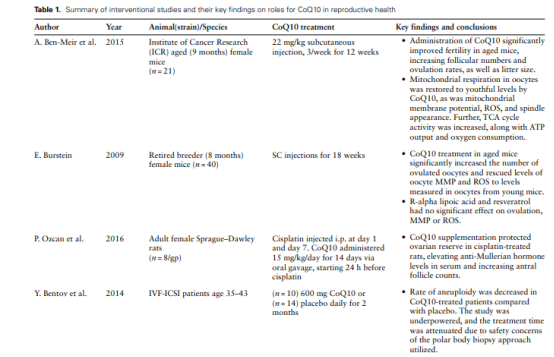
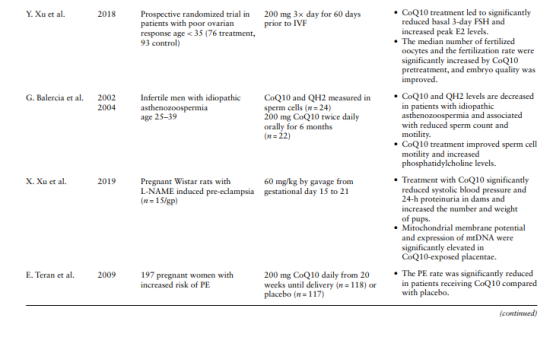
Most notably, PQQ shows promise in interrupting the “intergenerational transmission” of metabolic disease. In mouse models of maternal obesity, low-dose PQQ supplementation during pregnancy significantly improved offspring liver health in adulthood—reducing fat accumulation and inflammation—with protective effects persisting even after supplementation ceased post-weaning.
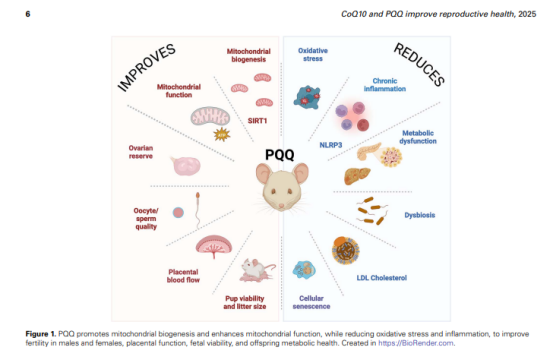
When combined, coenzyme Q10 and PQQ may offer synergistic benefits. Coenzyme Q10 maintains the efficient and safe operation of existing mitochondrial machinery, while PQQ promotes the expansion and renewal of mitochondrial networks. This “maintenance and construction” approach could systematically address the energy deficits and oxidative stress associated with obese pregnancies, offering an innovative perspective for improving health from preconception through pregnancy and into the long-term well-being of offspring.
Despite promising preclinical evidence, caution is warranted. The strongest data for their combined benefits currently come from animal and in vitro studies. Large-scale clinical trials in obese pregnant women
Importantly, these nutrients
In summary, addressing pregnancy obesity and its far-reaching consequences requires a multifaceted approach. The complementary mechanisms of coenzyme Q10 and PQQ, rooted in cellular energy metabolism, point toward a promising new pathway. Future research must translate these preclinical insights into clinical practice that truly benefits mothers and children. For individuals, staying informed and consulting healthcare professionals remains essential for making sound health decisions.
This article is based on an objective interpretation of the academic review “A role for the antioxidants coenzyme Q10 and
Autor:
admitir

Haga clic en la esquina superior derecha
compartir con amigos







 Mantenga presionada la imagen para guardar/compartir

Desde su creación, la empresa se ha adherido a un enfoque centrado en las personas con un enfoque central en la salud humana y un compromiso con la innovación continua como ventaja competitiva. Se ha concentrado constantemente en la investigación científica de vanguardia en la industria global de la salud y el bienestar.
Navegación del sitio
Contacto
Dirección: Edificio 21, Yinfeng International Bio-city, No. 1177 Chunlan Road, Jinan, Shandong China Código postal: 250100 Teléfono de contacto de comercio nacional: +86-18980869808 +86-19854163113 Correo electrónico: info@yltnutra.com Teléfono de contacto del departamento de comercio internacional: +86-17778451219 +86-18980869808 Correo electrónico:jennyy@yltnutra.com
Suscríbete a nosotros
Ingrese su dirección de correo electrónico para nuestra lista de correo para mantenerse actualizado.

© 2026Shandong Yuanlitai Medical Technology Co. Ltd. . All rights reserved Lu PCI No. 2022033305 mapa del sitio